It is mentioned in the Shastras that performing Bhakti in Kaliyuga will be the easiest. Attaining the Lord has never been easier than it is now. Even our own Gurudeva Param Pujya Sri Sri 108 Premadasa Babaji Maharaj says that one can attain the Lord even as one is having ice-cream and cakes in one’s living room. Continue reading “Modernism and Bhakti”
Month: June 2016
In Pursuit – Part Four
Only by the mercy of Srila Gurudeva who belongs to the category of rasika can a disciple enter into the realm of Rupa Goswami’s rasika poetry. These poems are the heart of Rasika Bhava Sadhana or the nectarine sweet mellows of conjugal pastimes of the divine couple. A person who does not, Continue reading “In Pursuit – Part Four”
Narrower the better
Bhakti is a process that begins with a broad base and then culminates at a narrow point. This is explained in the following manner. When a person takes to Krishna Bhajana seriously, initially one is not clear of the nuances of Bhakti. As the devotee embarks on a new journey, he is yet within the grip of his mundane consciousness. Although he takes up to various activities in the service of Krishna, he continues with his mundane habits. His Bhakti being immature, he does not have a thorough understanding of what is favourable and what is unfavourable to Bhajana. Although he visits sadhus, his attraction to things mundane continues with little change. Continue reading “Narrower the better”
Intention is everything in Bhakti
Bhakti is a process of the mind. Devotion of the mind or “Manasa Seva” is the highest form of service that can be offered to the Lord. Mind is the seat of all activities both physical and mental. Continue reading “Intention is everything in Bhakti”
Bhakti Tattva – Part Ten
After conversing with Rupa Goswami or Dabira Khasa the King returned to his residential chamber. Dabira Khasa and his brother Saker Malik namely Santana Goswami who served as Prime Minister at the Muslim King’s court decided to go incognito and visit Sriman Mahaprabhu. Continue reading “Bhakti Tattva – Part Ten”
Tyaga- The Basis of Atma-Nivedana
There are 9 processes of Bhakti and Atma-Nivedana or surrendering one’s all to the feet of Srila Gurudeva and the Supreme Lord completes our attempt to connect with the Lord. Atma-Nivedana is that aspect of free-will of the living entity which is completely applied in service of the Lord. Continue reading “Tyaga- The Basis of Atma-Nivedana”
Bhakti Tattva – Part Nine
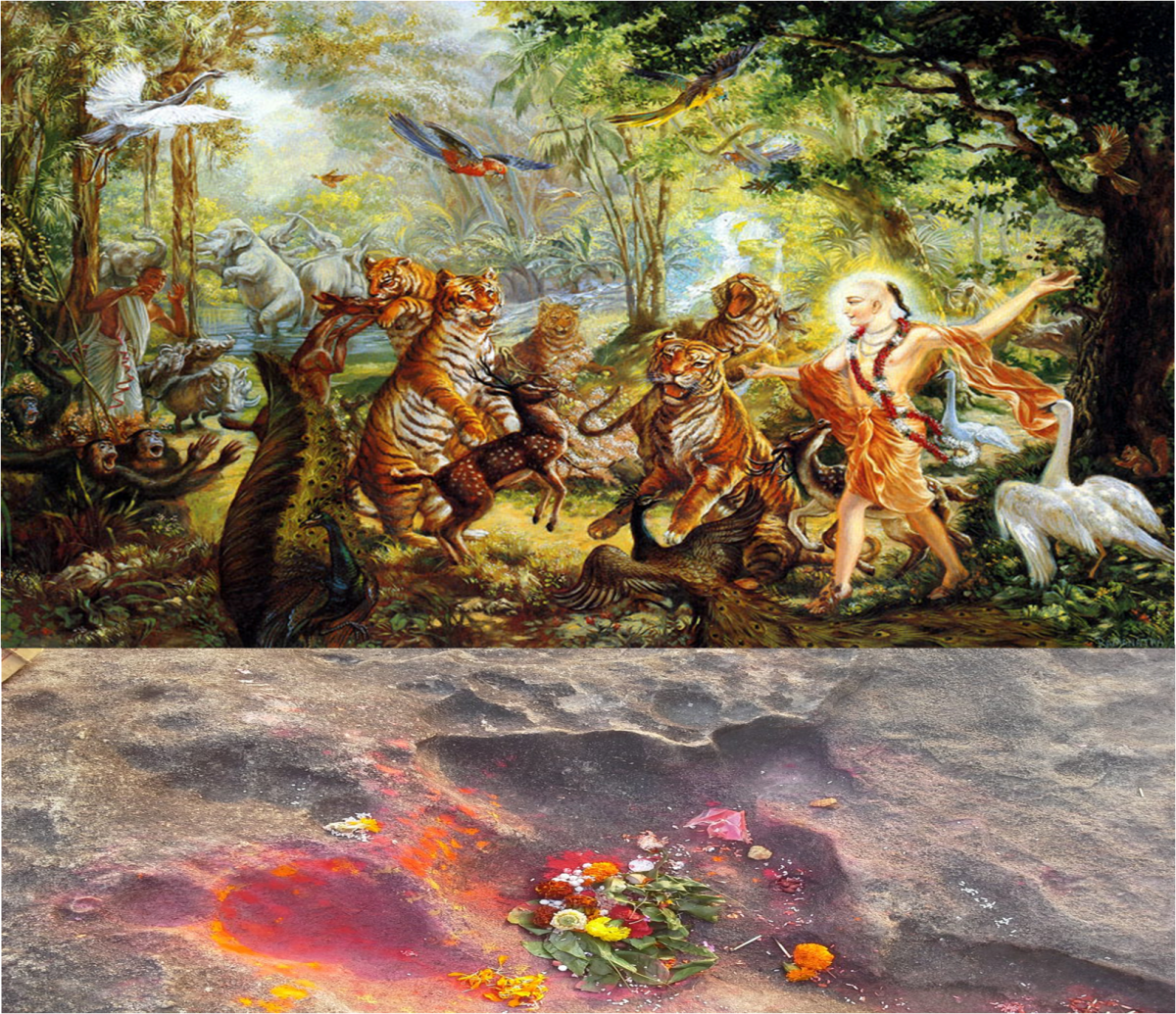
Lord Sriman Mahaprabhu, on His way to Vrindavana was followed by throngs in very large numbers; all of them undoubtedly were devotees. People saw the Lord at various destinations and became delirious with divine love. They could not bear to separate themselves from the Lord and new sets of people joined the sea of humanity as the Lord proceeded towards Vrindavana. Wherever the Lord placed His lotus feet , crowds would gather to collect foot dust and roads were dug deep wherever the feet of the Lord fell , thus the crowd gathered cart-loads of foot dust. Continue reading “Bhakti Tattva – Part Nine”
In Pursuit – Part Three
Sri Thakhura Mahasaya is in “Lalasa” or divine expectation of being granted servitude at the feet of Srimati Radharani and thus he is in the mood of Das anudas which means he is the servant of Loknatha Goswami , who in turn is the servant of Rupa Goswami who in turn is the servant of Sriman Mahaprabhu. In his eternal form as a Campaka Manjari, Thakhura Mahasaya is the servant of Sri Manjulali manjari who in turn is the servant of Rupa Manjari who in turn is the servant of Srimati Radharani. Continue reading “In Pursuit – Part Three”
Smaranam, Nerve Centre of Bhajana
If Shravanam and Kirtanam is the heart of Vaishnava Bhajana, Smaranam is the Nerve Centre of Bhajana. There are two aspects in Bhajana namely external and internal. The body and the senses of a living entity are continually being bombarded with impressions from sense objects which makes the living entity susceptible to infirmity. Continue reading “Smaranam, Nerve Centre of Bhajana”
Jeeva, an embodiment of treachery
Jeeva or a living entity is that soul which is within the grip of mind, intelligence, false ego and may or may not possess a gross body. Ghouls and ghosts are also jeevas but they do not have gross bodies. The human being is the most complex example of jeeva. In the context of Bhakti, understanding “jeeva sthithi” or the standing of the jeeva in the context of Bhakti Continue reading “Jeeva, an embodiment of treachery”
 Charan Pahari