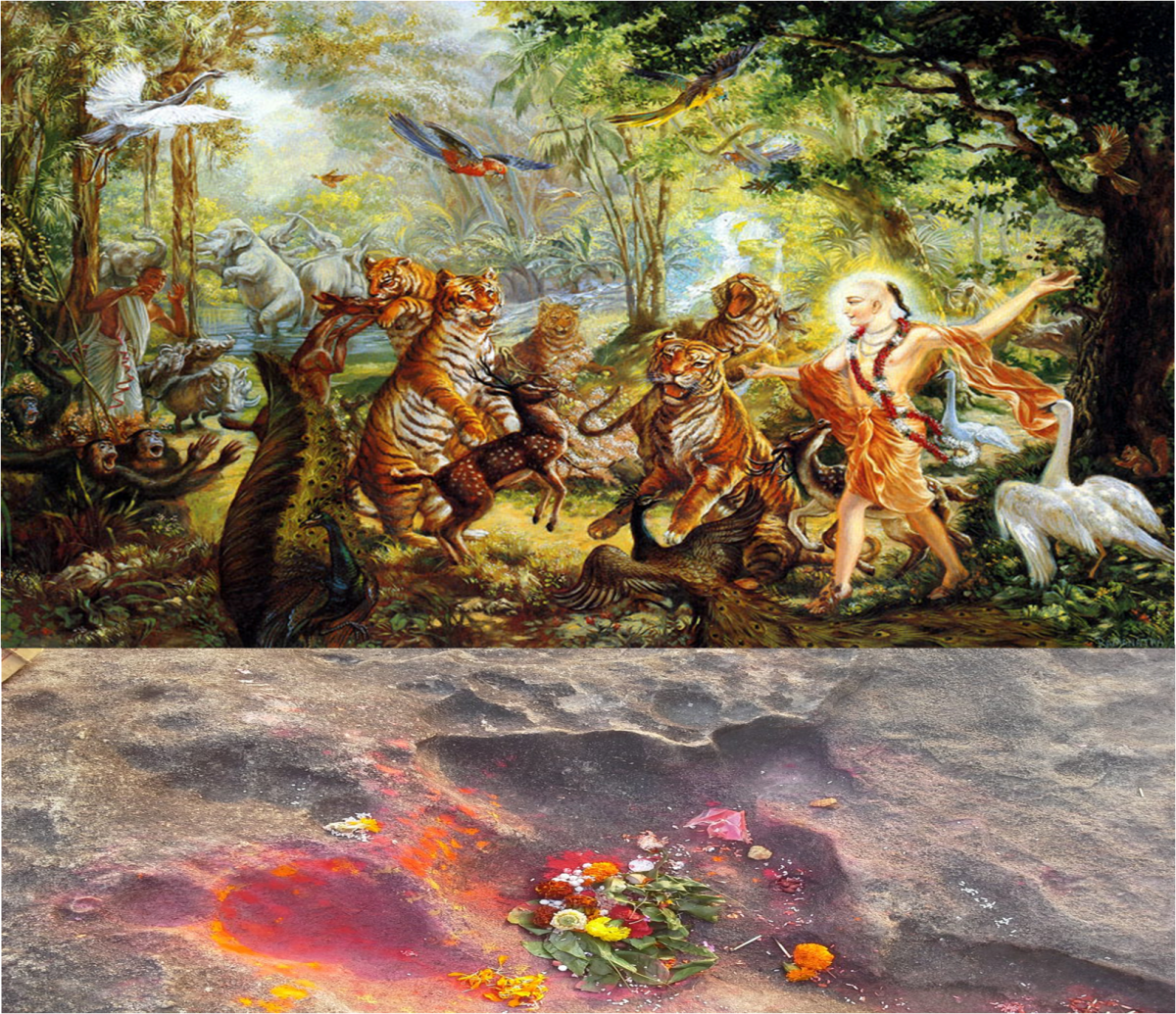
The Lord considered the two brothers’ statement and thought that it is indeed inappropriate to enter Sri Vrindavana Dham with so many devotees. Nowadays it has become fashionable for world renowned spiritual leaders to enter Dhama in large numbers. Although the intention is genuine, Continue reading “Bhakti Tattva – Part Twelve”
Deeksha Insights – Part Two
A person properly surrendered to Guru after Deeksha performs the Abhideya or process following which ultimately one will live with Krishna in an eternal body. It is not that one will only become qualified to exist that way after one leaves the body. If the qualification were to appear after leaving the body, Continue reading “Deeksha Insights – Part Two”
Deeksha Insights – Part One
By Deeksha I mean the process of accepting the Gopala Mantra and the Radha mantra from a Sadhguru (God-realised Vaishnava saint) as per the Gaudiya Vaishnava tradition as established by the 6 major Parivaras accepted by Sriman Chaitanya Mahaprabhu. The Deeksha process is always preceded by the Harinama Samskaar. When someone in full cognizance accepts Deeksha it should be clear that Sri Krishna accepts that person as His own. Harinama gives one the qualification of a Vaishnava whereas Deeksha ensures ones entrance into the eternal pastimes in the Madhura rasa in the mood of Sri Guru Manjari who is the personal maid-servant of Sri Praneswari. Continue reading “Deeksha Insights – Part One”
Nivritti-The path of fixed Consciousness
The path of Ashtanga Yoga or Jnana Yoga is called Pravritti marga. Here aspects of the mind, intelligence and inner nature are studied in the light of material nature and worked upon. Even on the paths of Jnana and Ashtanga unless one takes support of the superior path of Bhakti, perfection is impossible to attain. In these other paths the living entity loses his personal identity in the Absolute and thus he is not qualified to serve. Continue reading “Nivritti-The path of fixed Consciousness”
Liberation
Jivan-mukta or a person on a liberated platform is seen with different understanding from the standpoint of each of Ashtanga Yoga, Jnana Yoga and Bhakti Yoga. A person who stands liberated even while being functional in the body can only be a devotee, not a person from the Ashtanga or Jnana Yoga marga. Continue reading “Liberation”
Ego – Complete
Bhakti marga is the only way one can develop a complete and a powerful ego. Though this looks like a negative statement; it is the most positive aspect that any human being will vouch for. In any case there is no question of letting-go of ego because one cannot even survive without the ego even Continue reading “Ego – Complete”
Ego- Material and Spiritual
Let us analyze how we can get past the “I” and body consciousness in a practical way. Is it just fine to keep auto-suggesting “I am not the body”? Continue reading “Ego- Material and Spiritual”
Bhakti Tattva – Part Eleven
It is important that when one undertakes Hari-Nama, the Spiritual master changes one’s birth name and presents a spiritual name to the sadhaka. The old birth name of the sadhaka carries with it material vibrations because before undergoing samskaras at the hands of the spiritual master, Continue reading “Bhakti Tattva – Part Eleven”
Narrower the better-Sajatiya
In one of my earlier posts the topic of Narrowing down boundaries of the mind so that we can focus only on deep rooted aspects of Bhajana, was discussed. In this post there is a further elaboration on the association that we need to keep when we become utterly serious in the process of Raganuga Bhajana which is more rigorous than any other forms of Hari Bhajana. Continue reading “Narrower the better-Sajatiya”
Anarthas Q/A – Part Four
Q.Do anarthas disappear when one surrenders?
A.When saranagati (surrender) is taken properly then there is no more anartha. Bhakti Devi and Bhagawan are non-different. In Bhagavan’s internal potency, Bhakti Devi revels and there is no question that Anartha will remain in Her presence. However even in Her presence many times anarthas may still exist; Continue reading “Anarthas Q/A – Part Four”
 Charan Pahari